
- Published at
Stop Treating Your Fridge Like a Graveyard: The Financial Case for Fridge-First Planning
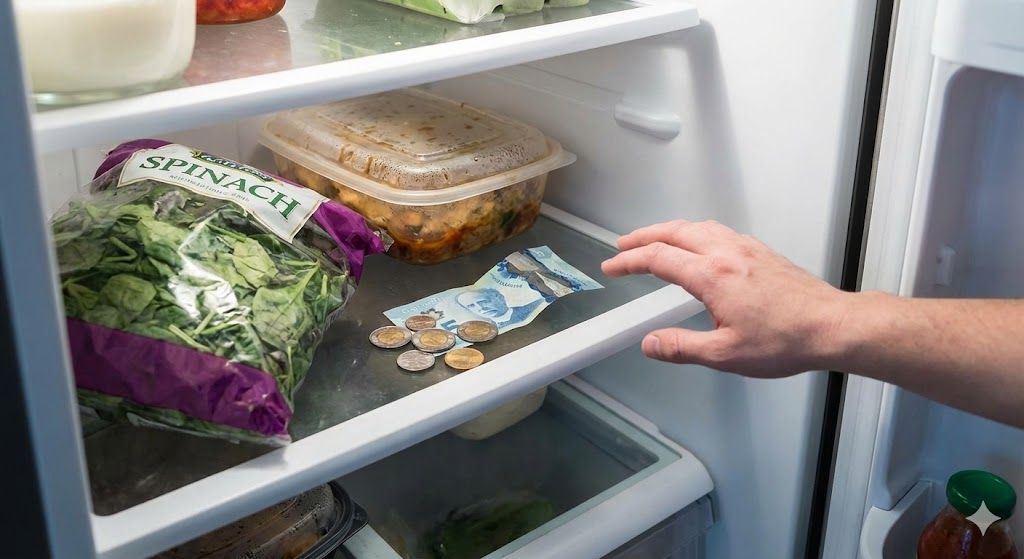
Stop throwing money in the green bin. Learn why your fridge is a financial asset and how a 'Fridge-First' audit can save you $1,300 a year on groceries.
Stop Treating Your Fridge Like a Graveyard: The Financial Case for Fridge-First Planning
Key Takeaways:
- The $1,300 Asset Leak: Why the average Canadian family is literally throwing a vacation’s worth of cash into the green bin every year.
- Inventory vs. Shopping: Shifting your mindset from “What do I want to buy?” to “What do I already own?” to break the Buy-Rot-Throw cycle.
- The 30-Second Audit: A high-ROI habit that ensures you never buy a second bag of carrots while the first one liquifies in the crisper drawer.
- Automated Accountability: How MealestroAI forces you to treat your kitchen like a bank account through proactive inventory checks.
The $80 Compost Pile
It was a Sunday evening in Ottawa, and I was performing the weekly “Ritual of Shame.” I was standing over my green bin, scraping a container of what used to be a very expensive beef stir-fry into the trash. Next went a bag of salad that had turned into a dark green swamp, and finally, a pint of strawberries that were more grey fuzz than red fruit.
As the lid of the bin snapped shut, I did the mental math. Between the organic produce, the grass-fed beef, and the “just in case” cilantro, I had just thrown away about $45 worth of food. If I did that every week - and let’s be honest, most of us do—I was looking at over $2,300 a year.
I realized in that moment that I didn’t have a “cooking” problem. I had an inventory management problem. I was treating my refrigerator like a graveyard - place where good intentions went to die - instead of treating it like a high-interest bank account.
In 2026, with grocery inflation hitting record highs, treating your fridge like a graveyard isn’t just a bad habit; it’s a financial disaster. To survive the current economy, you have to stop shopping from a blank slate and start managing your “Kitchen Assets.”
Part 1: The Brutal Financial Reality of Food Waste
We often hear that “food waste is bad for the environment,” but for a busy parent in 2026, that feels like a secondary problem. The primary problem is the Financial Bleed.
According to the National Zero Waste Council of Canada, the average household throws away over $1,300 worth of edible food every year. When you account for the 2026 inflation spike - where a family of four is spending $1,000 more on groceries than they did last year - that $1,300 represents the difference between financial breathing room and high-interest credit card debt.
The “Buy-Rot-Throw” cycle is a logistics failure where you pay full price for an asset (food), store it poorly, and then pay again (via municipal taxes or trash bags) to dispose of it.
The $1,300 Kitchen Leak: If your bank called you today and said they were accidentally shredding $110 of your money every single month, you would be at the branch within the hour. Yet, we allow this to happen in our crisper drawers without a second thought.
Part 2: The Psychology of “Inventory Blindness”
Why do we keep buying food we already have? It’s a cognitive glitch called Inventory Blindness.
When we walk into a grocery store, our brains are wired for “Discovery.” We see the bright lights, the fresh displays, and the “New” labels, and we enter a state of Aspirational Shopping. We buy the kale because we want to be the kind of person who eats kale, completely ignoring the fact that we already have three wilted heads of it at home.
Furthermore, the physical design of the modern refrigerator encourages waste. Deep shelves and opaque crisper drawers create “Dark Zones” where ingredients go to be forgotten. This leads to Duplicate Spending, where you buy a second jar of mayo or a second bag of onions simply because you couldn’t see the first one buried behind the leftover pizza.
Part 3: Tactical Solutions: The “Fridge-First” Framework
To reclaim your $1,300, you must move from “Vibe-Based Shopping” to an Inventory-First Strategy. Use these three tactical steps to treat your fridge like a bank account:
1. The 30-Second “Crisper Audit”
Before you open a single flyer or recipe app, you must audit your current assets.
- The Tactic: Open your fridge and pull out the two items closest to expiration. These are your “Must-Use Assets.”
- The Example: If you find half a bunch of asparagus and a container of sour cream, your meal planning for the night is 90% done. You aren’t “deciding what to eat”; you are “deciding how to use the sour cream.”
2. Shop the “Dark Zones” First
Most people start their meal plan with a blank piece of paper. This is a mistake.
- The Tactic: Start your plan by listing the ingredients you already own that are “hidden.”
- The Example: That frozen bag of peas and the half-used box of pasta are your “Anchor Ingredients.” You are only allowed to buy ingredients that complement what you already own.
3. Clear Container Psychology
If you can’t see it, you won’t eat it.
- The Tactic: Invest in clear glass storage containers. When you have “Planned-Overs” (leftovers that were intentionally made to be used in a second meal), store them at eye-level in clear glass.
- The Result: When you open the fridge at 5:00 PM, your brain sees “Dinner Ingredients” instead of “Unidentified Objects.”
Part 4: How MealestroAI Automates Your Kitchen Inventory
I built MealestroAI because I realized that “remembering to check the fridge” is a high-effort task for a tired parent. We needed a system that forced us to be responsible with our money.
When you use MealestroAI, treating your fridge like a bank account happens automatically:
- Pantry-First Logic: The AI doesn’t just look at what’s on sale in Ottawa; it looks at what you told it you already own. It prioritizes recipes that use your existing “Must-Use Assets,” effectively “withdrawing” value from your fridge before asking you to “deposit” more money at the grocery store.
- Bridge Planning Architecture: The system builds “Bridge Plans” where your inventory is used across multiple days. If you buy a large bag of spinach because it’s a “Loss Leader” in the Metro flyer, the system ensures that spinach is used in Monday’s salad and Tuesday’s smoothie, so nothing hits the green bin.
The Result: A High-Yield Kitchen
The goal isn’t just to reduce waste; it’s to increase your household’s financial efficiency. When your fridge becomes a bank account, you stop the $1,300 leak and start using that money for things that actually matter—like a family vacation instead of a fuller compost bin.
Stop the leak. Let MealestroAI manage your kitchen inventory automatically.