
- Published at
The Leftover Problem: How to Break the 'Buy-Rot-Throw' Cycle
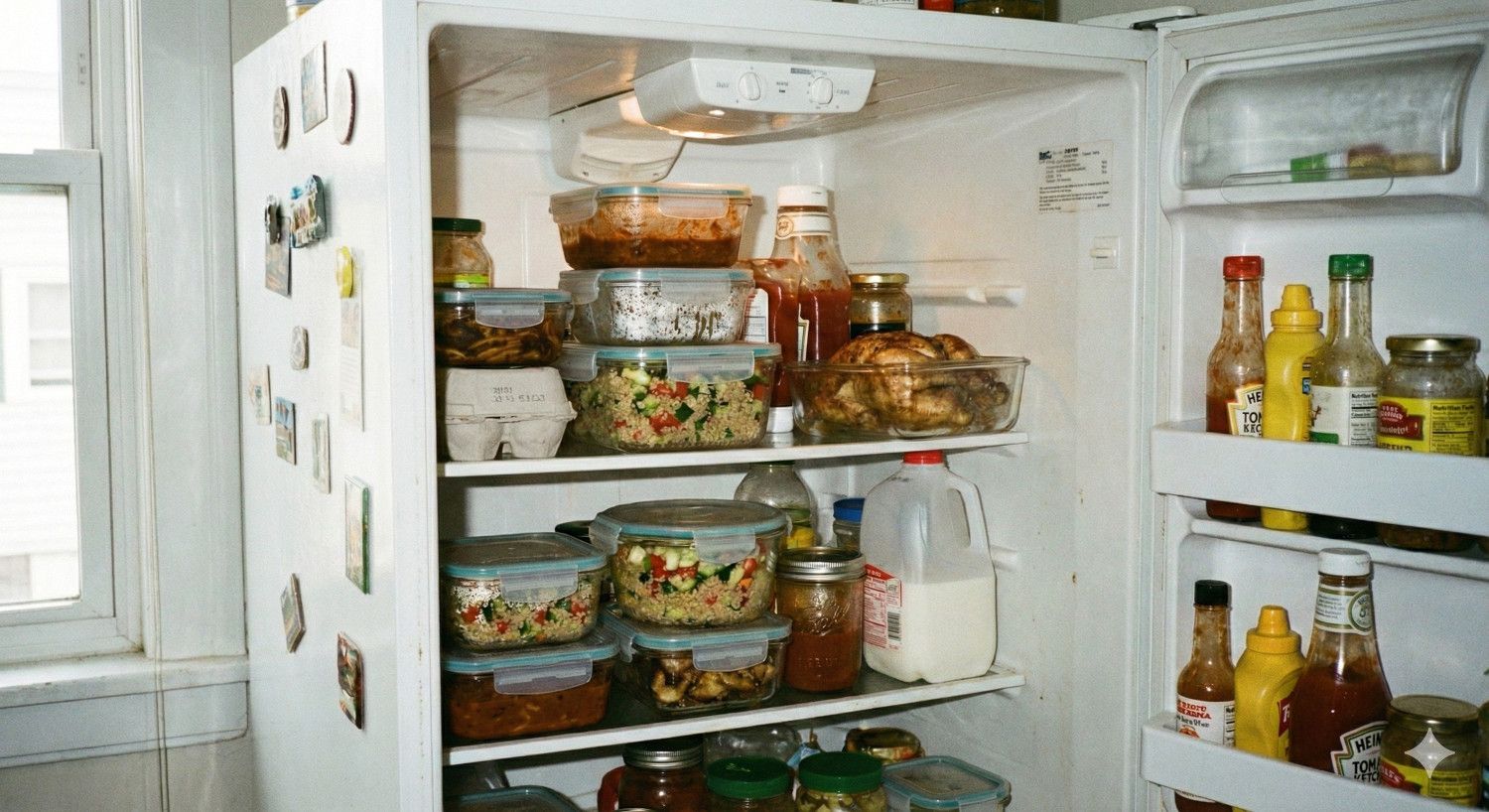
Throwing away food isn't a discipline problem; it's a logistics problem. Learn how to stop the 'Buy-Rot-Throw' cycle using Bridge Planning.
The Leftover Problem: How to Break the “Buy-Rot-Throw” Cycle
Key Takeaways:
- The “Just in Case” Trap: Why prepping food (like salad) without a plan is just delaying the trash can.
- The Cost of Chaos: The average Canadian family throws away $1,300 per year. That is a family vacation in the bin.
- The Fix: Shifting from “Leftovers” (boring) to “Planned-Overs” (strategic) using the Bridge Method.
The Salad Trap (A Personal Confession)
Three days ago, my wife did something with the best of intentions.
She bought a beautiful head of lettuce, washed it, chopped it, and put it in a container in the fridge. When I asked her what the plan was, she said, “If someone wants it, it’s ready.”
It was a lovely thought. But hope is not a strategy.
Because there was no specific meal attached to that salad — no Tuesday Taco Night where it was a mandatory side — it became invisible. I didn’t reach for it. She didn’t reach for it. It pushed further and further back on the shelf.
Yesterday, I threw it away. It had turned into green slime.
I felt that familiar pang of guilt as I scraped “good intentions” into the compost bin. We have the tools, we know better, and yet we still fall into the “Buy-Rot-Throw” Cycle.
If you have ever stared at a container of fuzz on a Friday night and felt like you failed, I want you to know: Food waste is not a discipline problem; it is a logistics problem.
What is the “Buy-Rot-Throw” Cycle?
The Buy-Rot-Throw Cycle is a behavioral loop where families purchase fresh produce based on aspiration (“I will eat healthy this week”) but fail to cook it due to exhaustion (“I am too tired to cook”). The food rots, leading to guilt, waste, and financial loss.
Part 1: The Hidden Cost of “Input” Planning
Most families plan what to buy (Input) but never plan exactly when to eat it (Output).
When you shop on Sunday morning, you are “Aspirational You.” You imagine eating healthy salads, roasting whole chickens, and chopping fresh veggies. You buy the bag of apples at the farm because they look delicious.
But by Wednesday at 5:00 PM, “Exhausted You” takes over. You just finished work. The kids are hungry. You open the fridge, see a container of plain rice or half a raw chicken, and your brain doesn’t see “dinner.” It sees “work.”
So you order takeout. The chicken sits for another two days until it expires.
The Financial Reality Check
The cost of this disconnect is staggering. It is not just a few dollars here and there.
According to the National Zero Waste Council, the average Canadian household throws away about 140 kilograms of food per year. That amounts to a loss of more than $1,300 annually.
Let that sink in. $1,300.
That isn’t just a statistic. That is a family vacation. That is months of soccer fees. That is a significant contribution to an RESP (Registered Education Savings Plan). And with 2026’s inflation spike making groceries even more expensive, eliminating food waste isn’t optional - it’s essential. We are literally throwing our family’s future security into the green bin, one bag of slimy spinach at a time.
Part 2: The Psychology of the “Tupperware Graveyard”
Why do we do this? Why do we cook a big meal on Tuesday, put the leftovers in a container, and then ignore them until they grow mold?
It comes down to Cognitive Framing.
Most families view leftovers as a “consolation prize”. It is something you eat because you have to, not because you want to. It feels like a repeat of yesterday. And because our brains crave novelty (especially when we are tired or stressed), we resist the old food.
The “Just in Case” Fallacy This is exactly what happened with my wife’s salad. We treat the fridge like a “holding cell” for food. We prep things “just in case” we want them.
But in a busy house, “just in case” never happens.
To break the cycle, we have to stop treating leftovers as an accident. We need to treat them as an ingredient.
Part 3: The Fix (Move from “Leftovers” to “Planned-Overs”)
This is the core philosophy behind MealestroAI: we don’t rely on willpower. We rely on a system called “Bridge Planning.”
Instead of seeing each night as a separate event (Monday Dinner, Tuesday Dinner, Wednesday Dinner), you build bridges between them. You cook an ingredient on Monday specifically to solve a problem on Wednesday.
Here is how you can try it this week without any fancy apps.
1. The “Cook Once, Eat Twice” Rule
Never cook a protein for just one night. It takes the same amount of time to brown 2lbs of beef as it does to brown 1lb.
- Night 1 (Tuesday): Taco Night. You brown the beef.
- The Bridge: Before you serve dinner, take half the seasoned meat out of the pan and put it in a container.
- Night 2 (Thursday): Quesadillas or Taco Salad.
Why this works: By planning the reuse before you cook, the leftover meat isn’t “old food” — it is “prepped ingredients.” You have just saved yourself 20 minutes of cooking on Thursday. “Exhausted You” will look at that pre-cooked meat and think, “Thank goodness, dinner is halfway done.”
2. The “Buffet Night” (The Friday Reset)
In our house, we stop cooking on Fridays. We designate Friday as “Buffet Night” or “YOYO” (You’re On Your Own).
- Pull every container out of the fridge.
- Add a “fresh factor” (a loaf of fresh bread, some cut fruit, or raw carrots).
- Let everyone pick what they want.
This clears the fridge before the weekend shopping trip. It ensures you start Saturday with a clean slate and zero guilt.
3. Change the Container, Change the Mindset
This sounds simple, but it works. Do not store leftovers in the pot you cooked them in.
- Bad: Storing a generic mass of pasta in a cloudy, stained tub.
- Good: Portioning the pasta into individual glass containers for easy lunches.
When you portion food immediately, you lower the “friction” of eating it later. You are removing a decision. It is much easier to grab a ready-to-heat lunch than to stare at a cold pot of spaghetti and wonder if it’s worth the effort.
Part 4: How MealestroAI Automates “The Bridge”
I built MealestroAI because I was tired of the BBQ Crisis.
I remember one Labor Day, standing at the BBQ cooking sausages, while my wife asked me to defrost a hamburger for my daughter because she wouldn’t eat the sausage. I was cooking three different meals, sweating, frustrated, and running out of propane.
I realized: I don’t need more recipes. I need a system.
When you use MealestroAI, the “Bridge Method” happens automatically:
- Smart Portioning: We calculate exactly how much to buy so you don’t have random half-bags of spinach left over.
- Ingredient Reuse: If you buy a jar of salsa for Tuesday, the system creates a plan to use the rest of that jar on Thursday.
- Pantry First: Before you shop, you tell the system what you have. We build the plan around that, saving you money instantly.
The Result: From Guilt to Calm
When I stick to this system, the guilt disappears because the math works.
There is no “Can we eat something else?” because the preferences were set beforehand. There is no frantic emotional buying of apples we won’t eat.
There is just good homemade food, a clean fridge, and quality time bonding at the table. That is the feeling we are chasing. Not perfection—just rhythm.